
Fabric Cloud Router
Launching a self-service cloud networking capability for hybrid and multi-cloud connectivity
Overview
Equinix Fabric Cloud Router was introduced to simplify how enterprises connect distributed cloud environments. Traditional networking models required complex provisioning, manual configuration, and hardware, creating friction for teams building hybrid and multi-cloud architectures.
Fabric Cloud Router provided a software-defined routing layer within Equinix Fabric, enabling customers to dynamically route traffic between cloud providers, data centers, and enterprise environments through a self-service interface.
The challenge was not only introducing a new capability but helping customers understand how it simplified real-world networking workflows and accelerated adoption of hybrid cloud architectures.
The Challenge
Enterprise infrastructure teams were increasingly adopting hybrid and multi-cloud environments, but network architecture often lagged behind application and platform innovation.
Many customers faced challenges including:
Complex network configuration across multiple cloud providers
Limited visibility and control over interconnection traffic
Slow provisioning processes requiring manual infrastructure changes
Difficulty scaling network connectivity alongside application workloads
At the same time, sellers needed a clear way to explain how Fabric Cloud Router fits within existing Equinix Fabric services and how it solves these operational challenges.
The go-to-market strategy needed to accomplish three things:
Clarify the product’s role within hybrid and multi-cloud architectures
Enable sales and partners to communicate the value clearly
Drive adoption among enterprise infrastructure and platform teams
My Role
As Senior Product Marketing Manager, I led key components of the go-to-market strategy and launch execution for Fabric Cloud Router.
My responsibilities included:
Developing key messaging and positioning for the product
Translating complex networking architecture into clear solution narratives
Creating sales enablement materials and solution plays
Coordinating cross-functional launch activities across product, marketing, and sales teams
Supporting global field teams with customer-facing messaging and use cases
The work required close collaboration across product management, engineering, alliances, and field teams to ensure consistent messaging and effective sales readiness.
My Approach
Translating Technical Capabilities into Business Value
Fabric Cloud Router introduced managed routing capabilities that were not technically sophisticated, yet still unfamiliar to many buyers. I worked to translate these capabilities into narratives focused on operational outcomes.
Key messaging pillars included:
Simplified hybrid and multi-cloud networking
Faster provisioning and operational agility
Greater visibility and control over interconnection traffic
Reduced network complexity for distributed workloads
This shift from feature-based messaging to solution storytelling helped sellers connect the product to real operational challenges.
Building Sales-Ready Solution Plays
To support sales execution, I developed enablement assets designed for enterprise infrastructure conversations.
These included:
Solution positioning frameworks
Customer-facing presentations
Architecture visuals explaining traffic flows
Messaging guidance for infrastructure and platform buyers
The goal was to ensure sellers could clearly articulate how Fabric Cloud Router complemented existing Fabric services and supported broader hybrid cloud strategies.
Aligning Launch Execution Across Global Teams and Functions
Launching a new networking capability required coordination across multiple functions.
I worked closely with:
Product teams to ensure messaging accurately reflected technical capabilities
Marketing teams to align launch press release, content and campaigns
Sales teams to prepare field enablement and customer conversations
Partner teams to support joint messaging with ecosystem partners
This cross-functional coordination ensured the launch materials were consistent and usable across regions and seller teams.
Results
The launch of the Fabric Cloud Router helped expand the Equinix Fabric platform’s value proposition by enabling customers to more easily connect to and manage multi-cloud environments using a self-service model.
Key outcomes included:
Successful global product launch supporting enterprise and digital-native customers
Enablement of field teams with clear solution positioning and messaging
Increased sales confidence in discussing hybrid cloud networking architectures
Contribution to broader pipeline generation across the Fabric portfolio
The launch narrative also reinforced Equinix’s positioning as a platform for interconnection and cloud networking in distributed infrastructure environments.
Key Takeaways
1. Technical products require translation, not simplification.
Buyers don’t need fewer details—they need clearer connections between architecture and outcomes.
2. Sales readiness is as important as product readiness.
If sales cannot confidently explain the value, adoption slows regardless of product quality.
3. Network infrastructure storytelling should focus on operational impact.
Customers respond most strongly to improvements in reliability, agility, and visibility.

Technical guides that help buyers evaluate services compared to networking alternatives based on key capabilities.
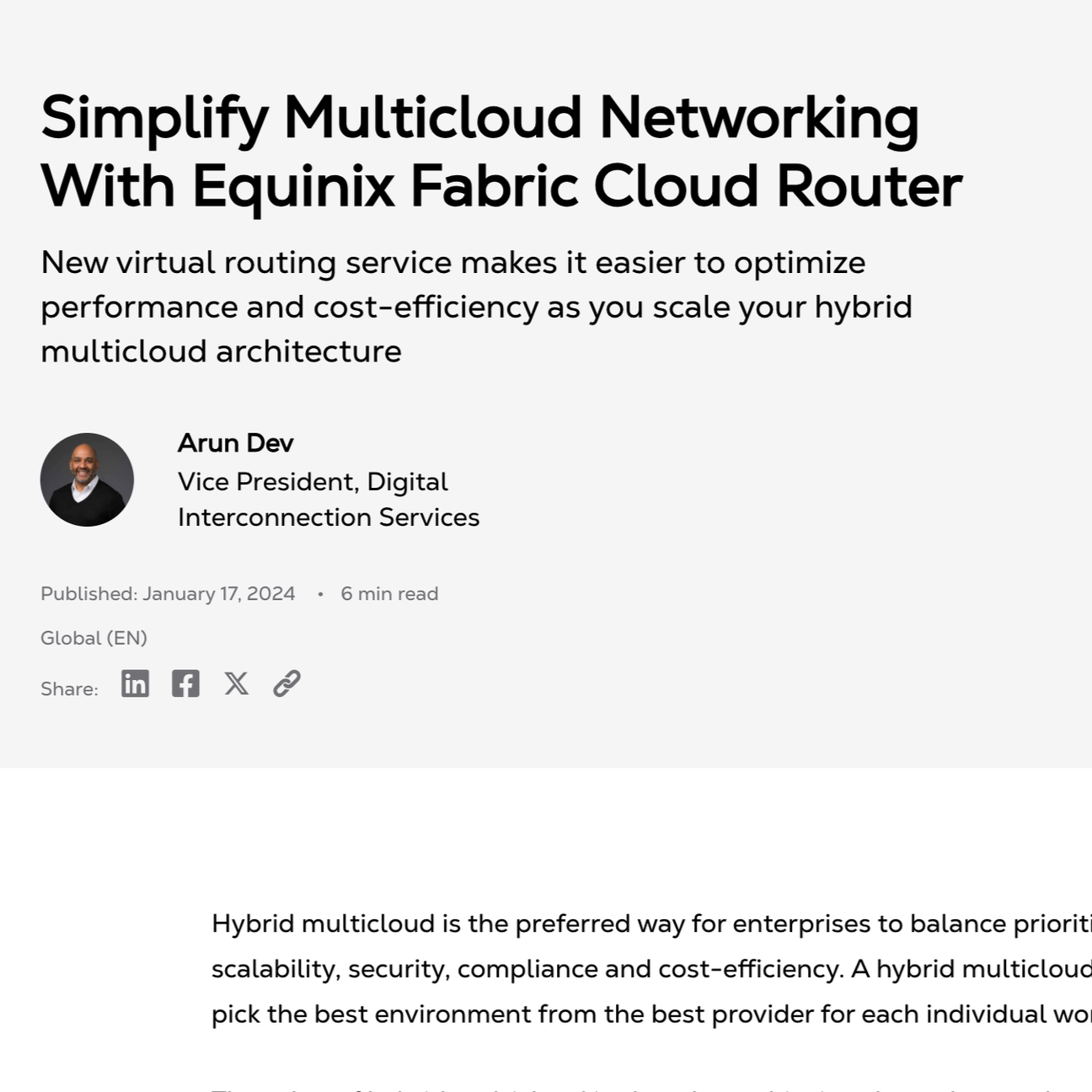
Fabric Cloud Router Launch Blog
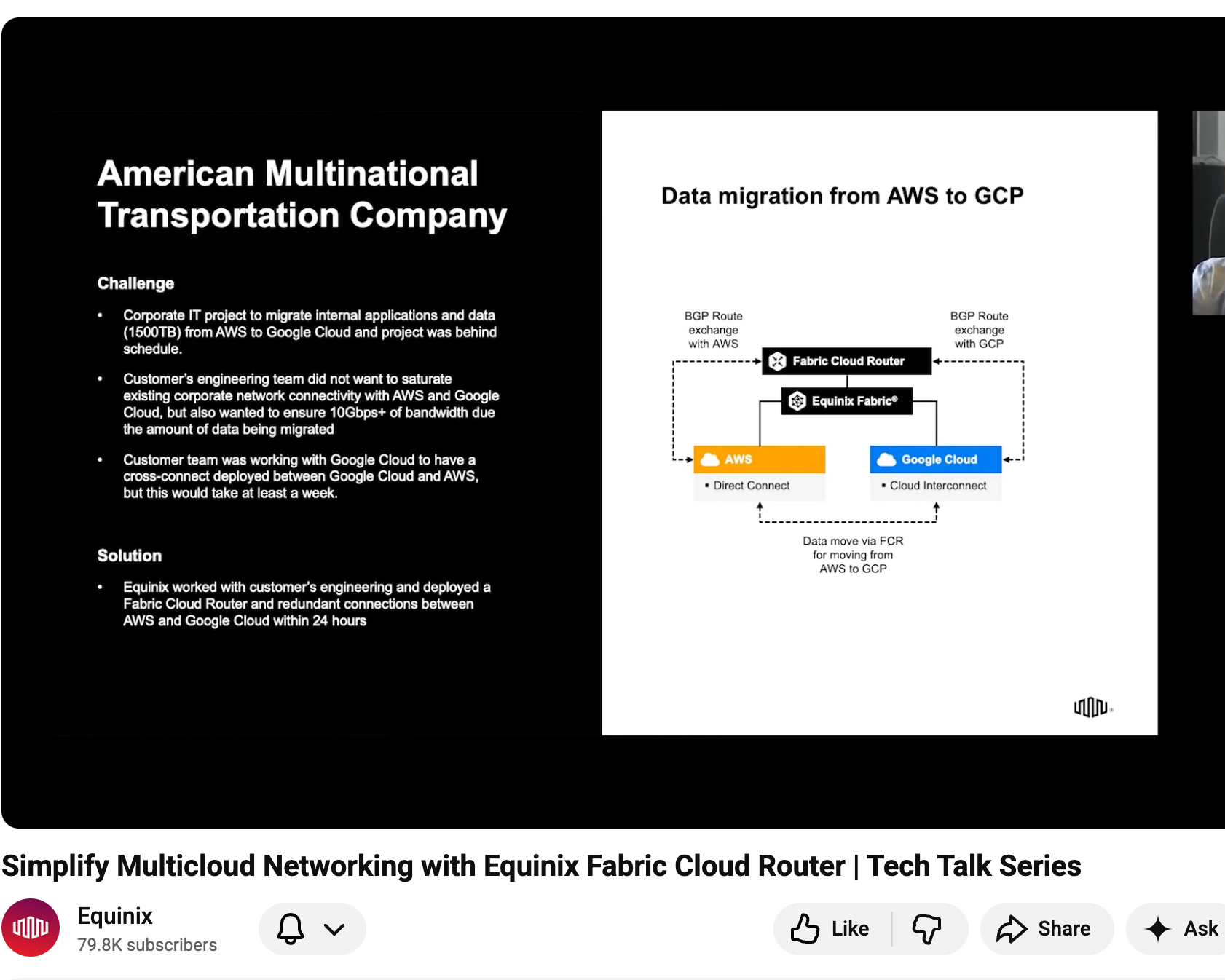
Educational Video Series for customers and sales, executed by regional SMEs.
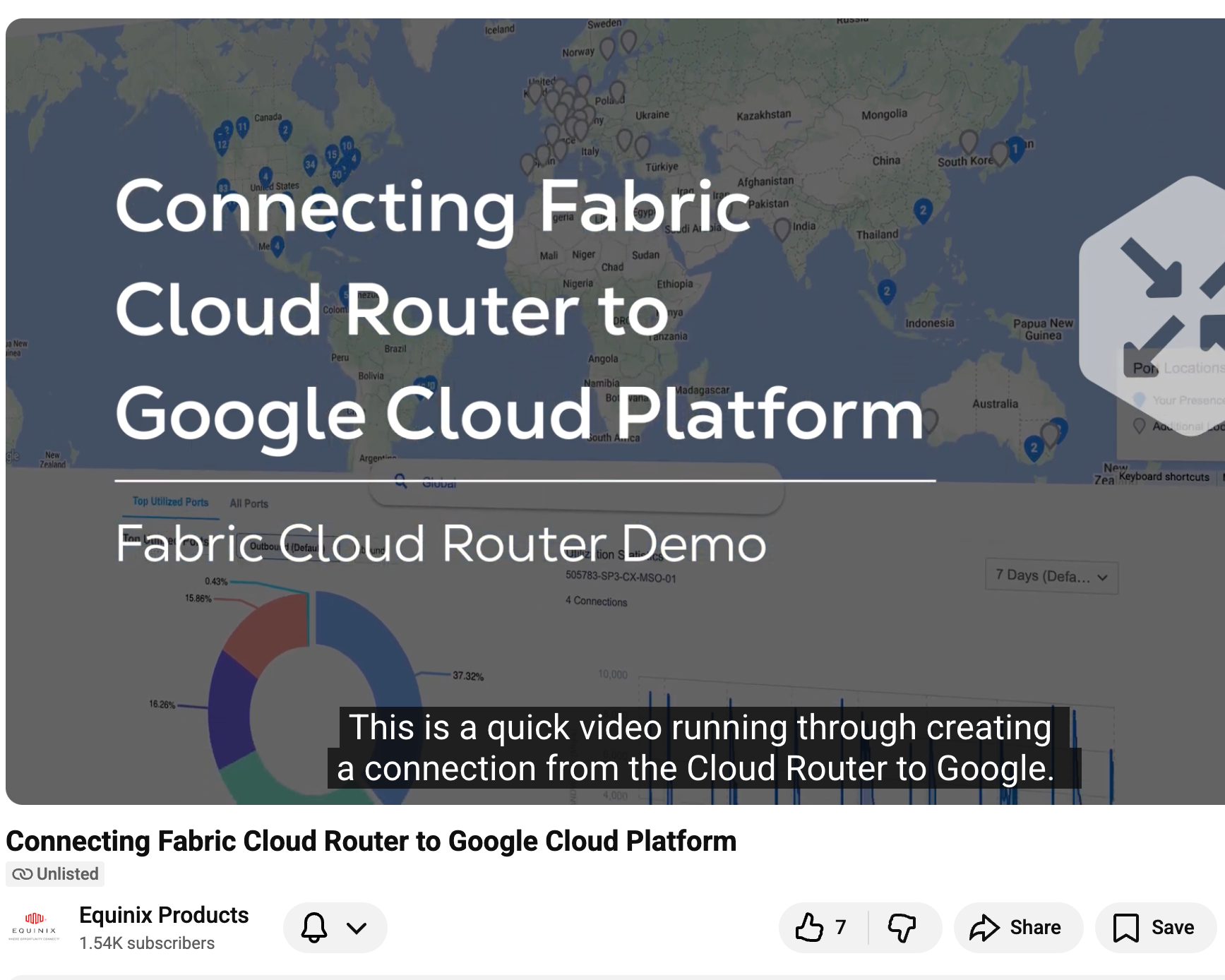
Demo videos introducing how the service can be used to gain access to cloud alliance partners.

Fabric Cloud Router Overview Video
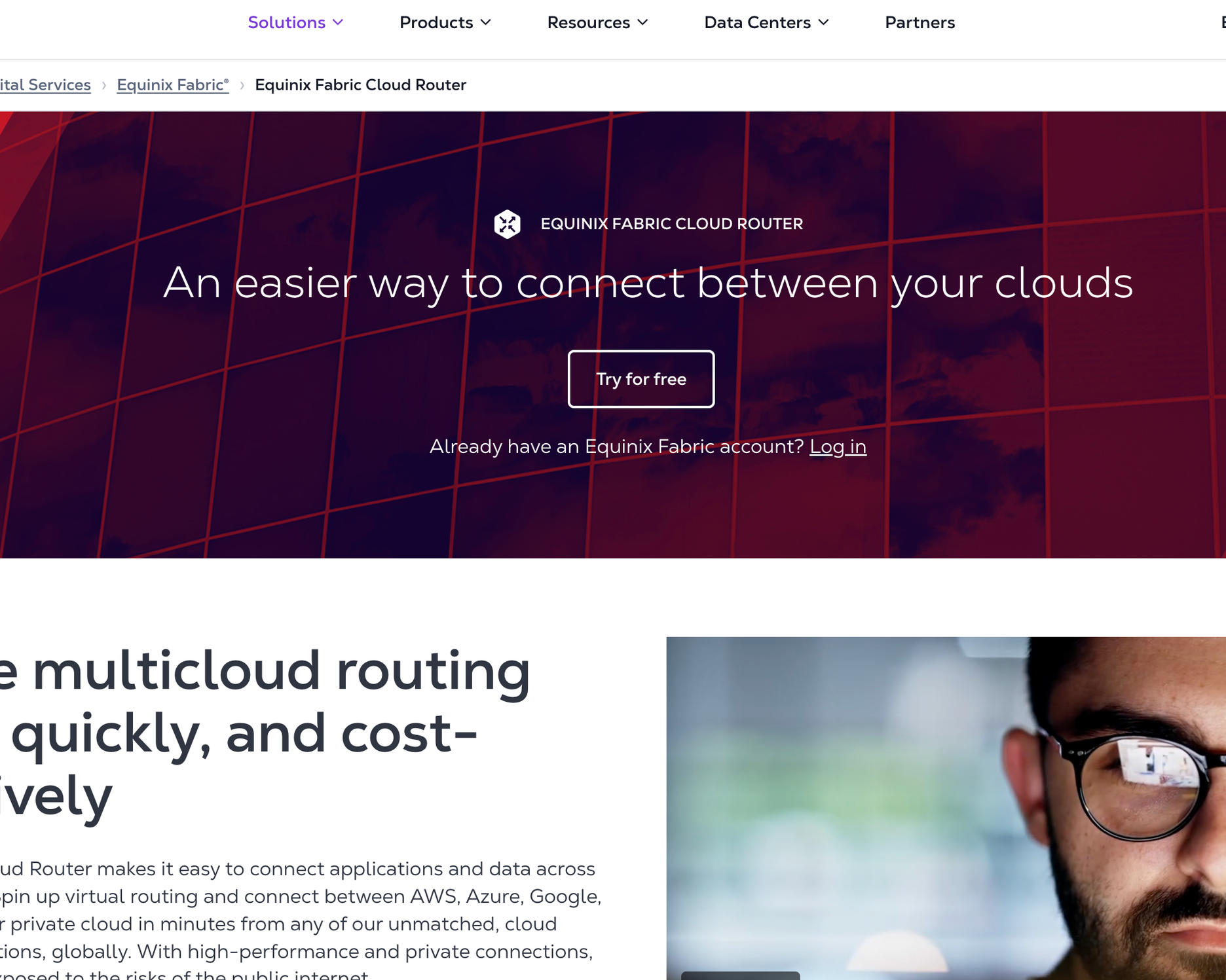
Fabric Cloud Router Product Page